From vaccines to cancer therapy, biologics are transforming how we treat disease. They don’t just reduce symptoms. They target the root cause.
Let’s dive in depth.
What Are Biologics?
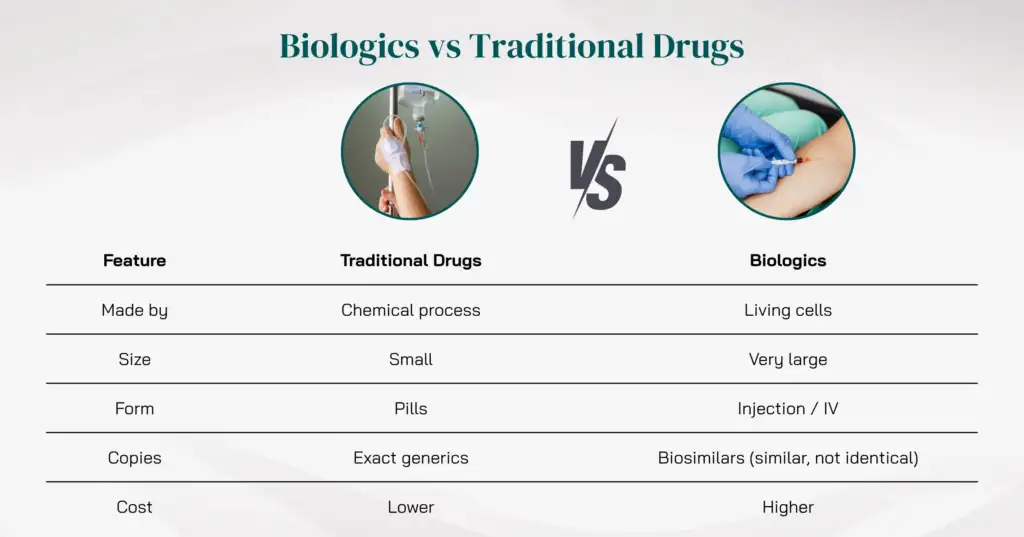
Biologics are medicines derived from living cells or biological materials. Unlike drugs such as Aspirin or Ibuprofen, which are made using chemicals, biologics are produced inside living systems. Scientists use cells like bacteria, yeast, animal, or human cells. These cells are programmed to produce a specific medicine, often a protein.
How Are Biologics Used?
Biologics are used in many serious conditions.
1. Cancer Treatment
Some biologics help the immune system find and destroy cancer cells.
2. Autoimmune Diseases
They control overactive immune responses in:
- Rheumatoid arthritis
- Crohn’s disease
- Psoriasis
3. Diabetes Care
Biologic insulin helps control blood sugar levels.
4. Vaccines
Vaccines train your immune system to fight infections. Vaccines are among the oldest biologics.
Common Types of Biologics
1. Monoclonal Antibodies
These are lab-made proteins. They act like your immune system. They can block harmful signals and attack cancer cells.
2. Vaccines
They prepare your body to fight disease before you get sick. Modern vaccines, like mRNA vaccines, are a big step forward.
3. Insulin & Recombinant Proteins
These are made using genetically engineered cells. They produce human proteins in large amounts.
4. Gene & Cell Therapy
These are advanced treatments. They can fix faulty genes and reprogram your immune cells.
5. Blood & Plasma Products
They are used to treat blood loss, clotting disorders, and some neurological conditions.
Benefits of Biologics
- Target specific disease pathways
- Work when other drugs fail
- Can slow disease progression
- Often fewer severe side effects than with chemotherapy
- Life-saving in many conditions
Limitations You Should Know
Biologics are powerful but not perfect.
- Need injections or IV (no pills)
- Expensive to produce
- Can take years to develop
- Risk of immune reactions
Some biologics may also:
- Increase infection risk
- Cause mild injection site reactions
Side Effects: What to Expect
Most people tolerate biologics well.
Common side effects:
- Redness or swelling at the injection site
- Headache
- Fatigue
- Nausea
Rare but serious:
- Allergic reactions
- Breathing issues
- Chest pain
Doctors usually screen patients before starting treatment.
What Are Biosimilars?
Biosimilars are similar versions of biologics. They are not exact copies. But they are highly similar and equally effective. Unlike generics, they can’t be identical due to natural variation in living cells.
What is the biggest advantage of this?
They help reduce costs and improve access.
Why Are Biologics Expensive?
Biologics are expensive because their production process involves:
- Growing living cells
- Monitoring for weeks
- Complex purification steps
- Strict quality checks
Another set of reasons includes:
- Development can take 10 to 15 years
- Clinical trials are costly
The Future of Biologics
Biologics are shaping the future of medicine. They are helping treat diseases that were once untreatable. With the rise of biosimilars:
- Costs may go down
- Access may improve
Stay Updated About Newly Approved Biologics
To stay ahead in the rapidly evolving biologics landscape, it is essential to track newly approved molecules, exclusivity timelines, and emerging market opportunities. Early visibility into these insights helps pharmaceutical companies make informed decisions, identify first-to-file opportunities, and plan strategic development pathways more effectively.
Platforms like NCE Grid enable this by providing real-time tracking of new biologics, empowering teams to act faster and stay competitive in a dynamic market.
At Spring BioSolution, we recognize the complexity of biologics and advanced therapies and the opportunities they bring to transform patient care. As a trusted global partner in comparator sourcing and clinical trial supply management, we collaborate with pharmaceutical companies, CROs, and biotech innovators to simplify challenges and accelerate innovation.
We’re excited to contribute to the biologics and biosimilars journey. In your view, how will biosimilars reshape patient care in the next decade?
Our expertise includes sourcing biologics, biosimilars, and specialized therapies for clinical trials, along with managing complex supply chains, including REMS with ETASU programs, orphan drugs, and temperature-sensitive products. With a strong focus on quality, compliance, and global reach, we ensure seamless and reliable supply solutions—helping bring innovative biologic treatments to patients faster.
FAQs
Is Ozempic a biologic?
No, Ozempic is not classified as a biologic. It is a peptide-based drug, made of a short chain of amino acids. While it is produced using biotechnology, it is smaller and less complex than true biologics. It works by mimicking the GLP-1 hormone to control blood sugar and appetite.
What is the difference between biologics and peptide drugs?
Biologics are large, complex molecules made from living cells, often containing thousands of atoms. Peptide drugs, like Ozempic, are smaller and more structured, typically made of short amino acid chains. This difference affects how they are classified, developed, and regulated.
Are biologics the same as chemotherapy?
No, biologics are not the same as chemotherapy. Chemotherapy attacks rapidly dividing cells, including healthy ones. Biologics, on the other hand, are targeted therapies. They focus on specific pathways or proteins, often resulting in fewer side effects compared to traditional chemotherapy.
What are common biologics used for ulcerative colitis?
Some widely used biologics for ulcerative colitis include Humira, Remicade, and Entyvio. These drugs work by controlling the immune response and reducing inflammation, helping patients manage symptoms more effectively.