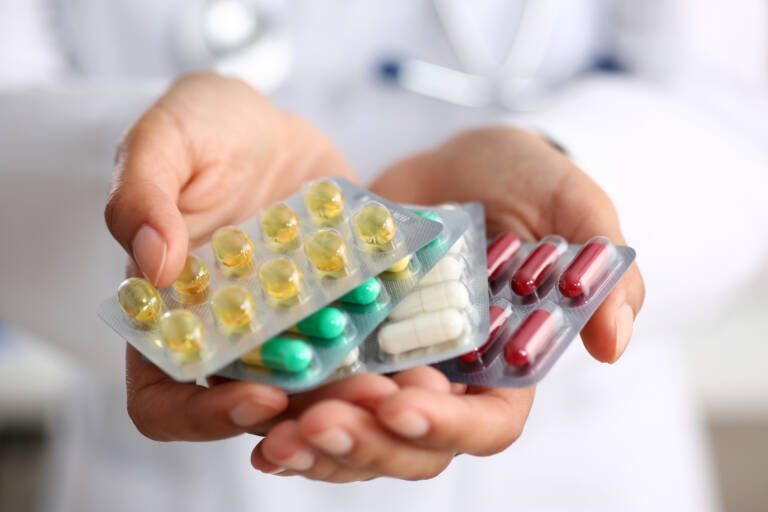
The statement "Reducing Pharmacy Waste: Proper Medication Storage" describes a series of methods and techniques used in pharmacies to reduce drug waste through appropriate storage practices. The objective is to minimize the environmental impact associated with the disposal of unused or expired medications while ensuring that pharmaceutical products are safe, effective, and viable for as…
Drug development is a long, complex, and costly process, often taking 12–15 years to bring a new medicine to the market. The challenge grows when companies aim to introduce the drug in multiple countries. Each nation has its own regulations and requirements, forcing pharmaceutical companies to adapt their development and registration processes for every market—a…
Key Elements of Cold Chain Logistics for Managing Temperature-Sensitive Pharmaceutical Drug Products
Certain pharmaceutical products require specific temperature control for storage and transportation and to be maintained until administered to the patients. They are classified as cool chain) requires temperature control between 2-8 deg Celsius) and Cold chain products requiring temperatures below 0 degrees. These products are temperature sensitive and need strict controls to maintain their usability.…
The pharmaceutical industry is one of the world’s fastest-growing and most influential sectors, playing a critical role in advancing healthcare, improving patient outcomes, and driving medical innovation. From developing life-saving medicines to supporting global clinical trials, pharmaceutical companies contribute significantly to modern healthcare systems.
According to industry estimates, the global pharmaceutical market is valued at…
Clinical trials are a much-specialised area and an important aspect of drug development. It is very intricate and involves several stakeholders and diverse factors that contribute to its study management and timelines. Clinical trials are a long-drawn process and to be successful it must meet its objective in the planned timelines. Thus, the entire process requires…
A Reference Listed Drug (RLD) is a brand-name drug developed by an innovator company and officially authorized by regulatory bodies like the U.S. Food and Drug Administration (FDA) to serve as the benchmark for generic copies of the innovator products. The FDA mandates that the generic manufacturers must demonstrate almost similar qualitative and quantitative composition to…
Comparator medicinal products are required for various reasons in the pharmaceutical industry. A right comparator remains an important participant for various research and development experiments. The researchers spend considerable time to find out a right comparator for their experiments and also try to work out how to obtain the right comparator from the right bonafide…
Biosimilars are generic copies of the innovator biological products. Biological products are produced from a variety of sources. These include yeasts, bacteria, and animal cells etc. that generate complex biological chemicals from live organisms that have potential use as medicines. Biological products can be produced from variety of biological matter and can have different inventive manufacturing…
The direct-to-patient (DTP) service is a healthcare model in which medical providers interact and collaborate with patients directly, without the need of typical intermediaries or channels. In order to establish the direct communication channel, DTP service engages use of technology and personalized communication strategies to strengthen patients and increase access to healthcare services. The DTP…
Precision medicine, often referred to as personalized medicine or stratified medicine, is a method of providing customized and individualized healthcare to the patient. This involves customizing medical therapies and specific preventative strategies to meet the unique needs of each patient by taking into account individual variances in genes, lifestyle, and environment. Precision treatment takes into…